
![Is Sharing More Valuable for Publishers on Facebook or Twitter? [STATS]](../../wp-content/uploads/2009/10/fb-twitter.jpg)




Facebook + Journalism 101
Posted on : 27-07-2025 | By : Vadim Lavrusik | In : Higher Education, Journalism school, Online Journalism
Tags: Facebook, Higher Education, journalism, Journalism school, journalists, Social Media
9
 Academia could be more social. So recently, I setup a Facebook Group for “Social Journalism Educators” to be able to connect and share resources around how they are teaching social media as part of their journalism curricula. As an adjunct professor teaching social media skills for journalists at Columbia University Graduate School of Journalism, I wanted to learn from other professors who were teaching similar courses or integrating it into their classes on the best skills to teach students and how best to achieve that in a classroom setting. It’s been a great resource already with close to 200 members, perhaps telling of how many journalism educators are trying to understand how to best teach social as part of the core skills.
I’ve also been working on building resources over the last few months for journalists as part of my job at Facebook as Journalist Program Manager. Much of this has been published and produced on the Facebook + Journalists Page, which I’d encourage you to check out (especially the tabs). As an educator, I’ve been thinking about how some of these resources might fit into a journalism curricula, and how they might be best taught in a classroom setting. So I’ve put together a document titled “Facebook + Journalism 101″ that professors can use to integrate into journalism curricula. It’s a starting point, and highlights some of the skills I’ve taught students in how to use Facebook as a reporting tool (even before I worked at Facebook).
I’ve included some key aspects of Facebook that can be used by journalists in their reporting, as well as examples of assignments that can help familiarize students with Facebook as a reporting tool.
 In 2010, we saw the rise of WikiLeaks through its many controversial leaks. With each leak, the organization learned and evolved its process in distributing sensitive classified information. In 2011, we’ll see several governments prosecute WikiLeaks founder Julian Assange for his role in disseminating classified documents and some charges will have varying successes. But even if WikiLeaks itself gets shut down, we’re going to see the rise of “leakification” in journalism, and more importantly we’ll see a number of new media entities,
  In a society that is more connected than ever, investigative journalists that were once shrouded in mystery are now taking advantage of their online community relationships to help scour documents and uncover potential wrongs. The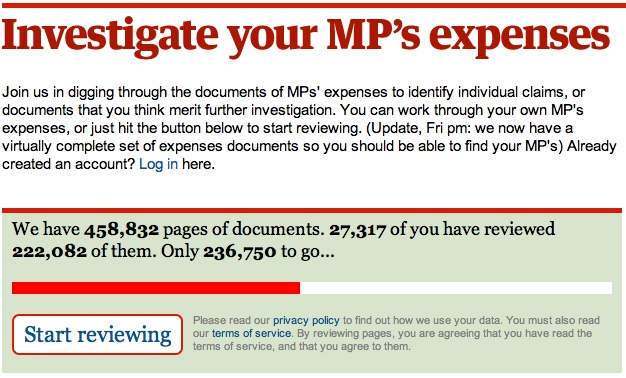
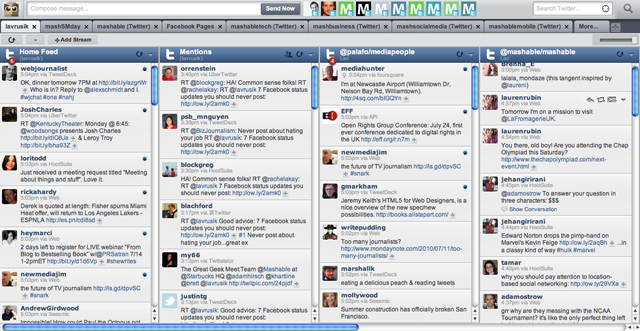
 After its first year of inception, I am excited to be teaching “Social Media Skills for Journalists” course at the Columbia University Graduate School of Journalism. It is a five-week course aimed at helping “journalists use social media (including such social sites as Twitter, Facebook, LinkedIn, Google Buzz, Foursquare, YouTube, among others).”

 Vadim Lavrusik a the public content manager at Facebook where he leads a team focused on product development and strategic partnerships to improve content on the platform. Previously, Lavrusik led Facebook's journalism program and partnership efforts with the journalism community while also teaching social media as an adjunct professor at the Columbia University Graduate School of Journalism. Prior to Facebook, I was the Community Manager and Social Media Strategist at